
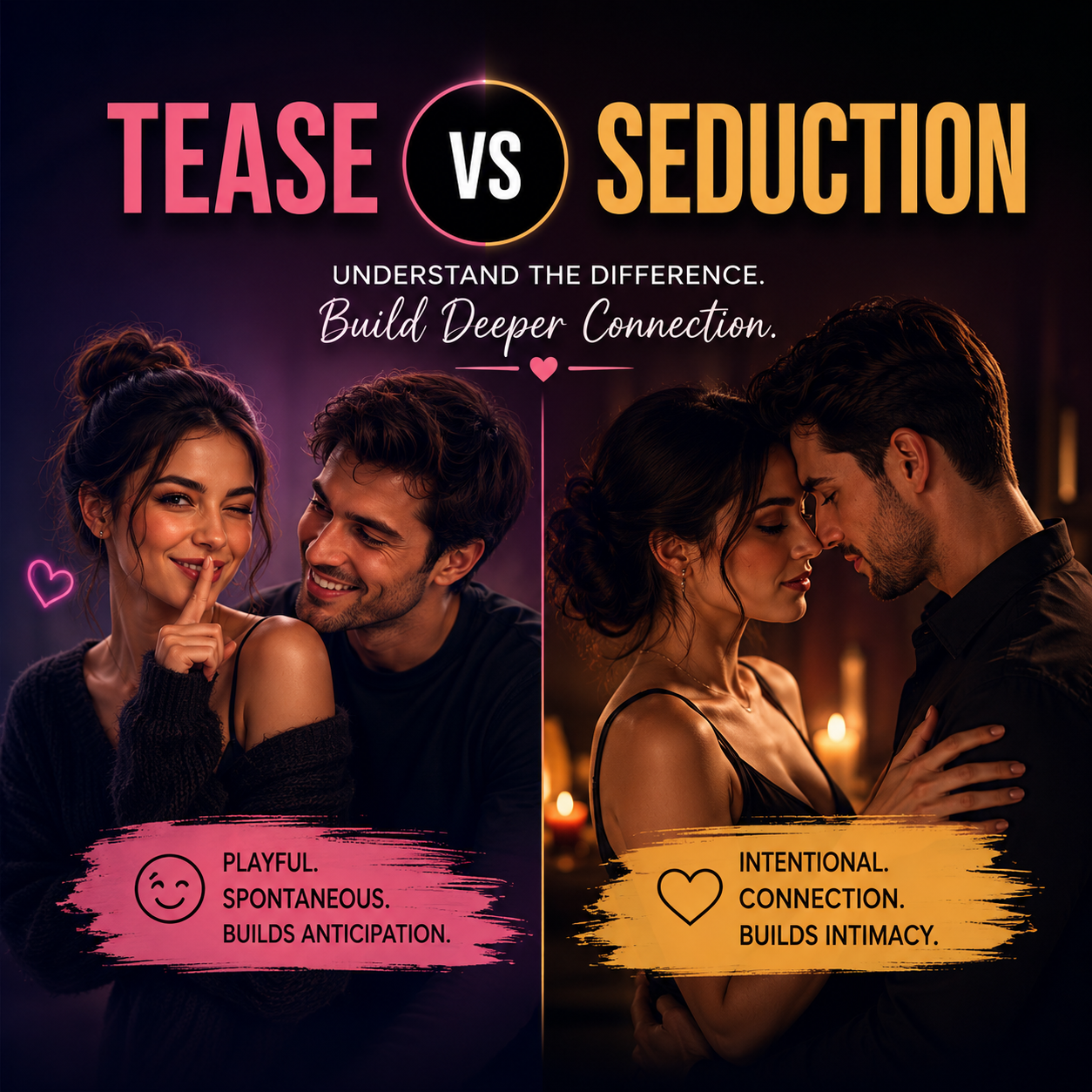
Tease vs Seduction: They're Not the Same Thing
Imagine your partner smiles, gives you a playful wink, and then walks away without saying another word. You laugh.
Later that evening, they prepare your favorite meal, put on music you both love, and spend the evening making you feel special before gently leaning in for a kiss.Both moments build anticipation.
But they don't do it in the same way.
The first is Teasing.
The second is Seduction.
Because these words are often used interchangeably, many people assume they're simply different names for the same thing. In reality, they describe two different ways of creating attraction and intimacy.
Understanding the difference can help couples communicate better, flirt more confidently, and avoid misunderstandings about each other's intentions.
What Is Teasing?
Teasing is a playful way of creating anticipation. It's usually lighthearted, spontaneous, and designed to spark curiosity or excitement rather than immediately lead to intimacy.
Teasing can happen throughout the day.
- It might be a smile across the room.
- A playful text message.
- A whispered joke only the two of you understand.
- Or simply saying, "I have a surprise for you later."
without giving away any details.
Notice that none of these examples are necessarily sexual. They're about creating intrigue and keeping the emotional connection alive.
Healthy teasing often includes laughter, confidence, and mutual enjoyment. It should make both people smile—not leave one person feeling embarrassed, pressured, or intentionally frustrated.
Key Insight
Teasing creates playful anticipation. Its goal is excitement and connection, not immediate intimacy.
What Is Seduction?
Seduction is more intentional.
Rather than simply creating anticipation, it involves gradually building emotional, romantic, or physical attraction. Unlike teasing, seduction usually has a clearer purpose: helping two people move closer together.
Imagine this situation.
After a long week, one partner plans a quiet evening at home. They dim the lights, prepare dinner, put away their phones, and focus entirely on spending quality time together.
Nothing is rushed. The conversation flows naturally. They compliment each other, share stories, laugh, and enjoy being present together.
Whether the evening becomes physically intimate isn't the most important part. The real point is that they intentionally created an environment where closeness could naturally develop.
That's an example of seduction.
It isn't about manipulation or convincing someone to do something they don't want to do. Healthy seduction respects consent, comfort, and mutual interest at every step.
Key Insight
Seduction is the intentional process of building attraction and intimacy through attention, connection, and mutual desire.
Tease vs Seduction: The Key Differences
Although both can increase attraction, they serve different purposes.
Teasing
- Playful and spontaneous
- Builds curiosity
- Often humorous
- Can happen without romantic intent
- Focuses on anticipation
Seduction
- More intentional
- Builds attraction and closeness
- Often romantic or emotionally intimate
- Usually has romantic or intimate intent
- Focuses on connection
The important thing to remember is that these aren't opposites. In healthy relationships, they often work together. A playful tease during the day may naturally lead to a romantic evening later on.
Why the Difference Matters in Relationships
Many misunderstandings happen because couples interpret the same behavior differently.
Imagine your partner sends a playful message during the afternoon. They're simply flirting and enjoying the moment. But you assume they're expecting intimacy later that night. Now both people have different expectations.
Or imagine someone carefully plans a romantic date. Their goal isn't just to be playful—they're trying to create emotional closeness. If their partner mistakes that effort for casual teasing, they may not recognize the intention behind it.
Neither person is wrong. They simply attached different meanings to the same behavior. That's why conversations matter. If you're unsure what your partner means, it's perfectly okay to ask.
Likewise, if you're the one initiating, being clear about your intentions can prevent confusion. Healthy relationships thrive when partners communicate openly instead of expecting each other to read between the lines.
Key Insight
The same action can be interpreted differently. Honest communication helps partners understand each other's intentions.
Can Teasing and Seduction Strengthen a Relationship?
Absolutely.
Playful teasing can keep long-term relationships feeling fresh. It reminds couples that flirting doesn't have to disappear after the honeymoon phase
Seduction, on the other hand, encourages partners to be intentional about creating moments of connection.
Instead of letting intimacy happen only when it's convenient, couples make time to focus on each other. The healthiest relationships usually include both.
- They laugh together.
- They flirt.
- They surprise each other.
- They also create opportunities for deeper emotional and physical connection.
Neither approach works well if one partner feels pressured or uncomfortable. The goal isn't to perform. The goal is to make both people feel desired, respected, and emotionally safe
Final Thoughts
Teasing and seduction both build attraction, but they do it in different ways. Teasing is playful, lighthearted, and creates anticipation. Seduction is more intentional, focusing on building emotional and romantic closeness.
Neither is better than the other. In fact, many healthy relationships naturally include both. Understanding the difference helps couples communicate their intentions more clearly and appreciate the many ways attraction can grow over time.
The mykfsapp Compatibility Assessment helps couples explore topics like flirting, romance, intimacy, and personal preferences in a private, judgment-free way. By comparing your responses across hundreds of relationship topics, you can better understand each other's expectations and start conversations that bring you closer.
Because attraction isn't just about chemistry. It's also about understanding how your partner experiences connection.